Next-Gen Quality Management. Built for Compliance. Powered by AI.

How to Handle Supplier and Vendor Non-Conformances Easily
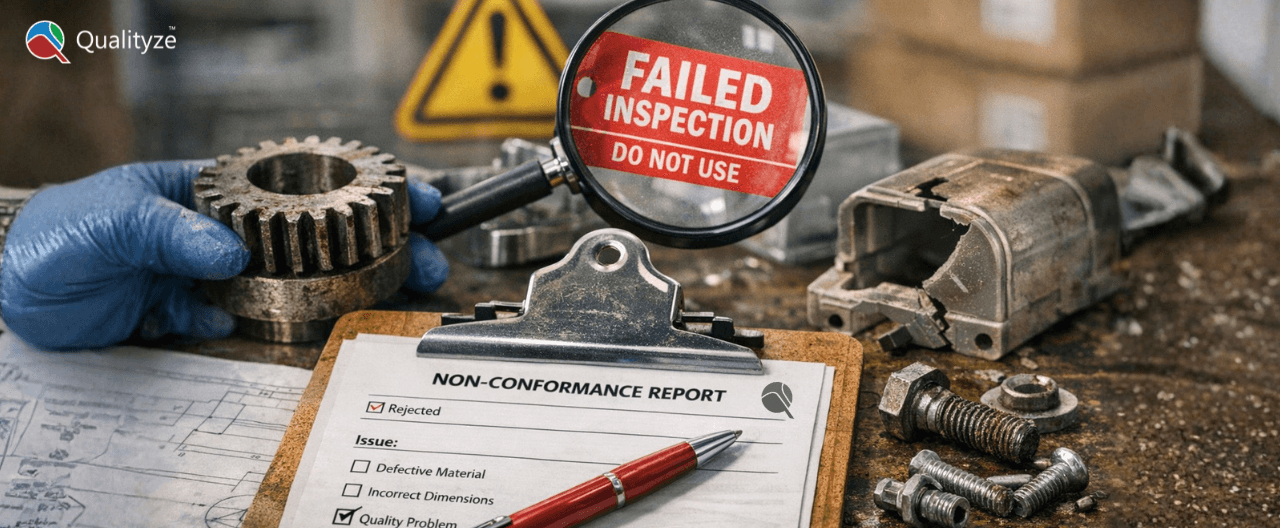
Handling supplier and vendor non-conformances within a QMS requires moving away from manual, paper-based processes toward automated, collaborative workflows. By implementing a standardized process using digital tools for reporting, segregating, and root cause analysis, you can turn non-conformance management into a proactive efficiency tool instead of a reactive burden. In a QMS, handling supplier non-conformances well requires an organized process that balances stringent compliance with collaborative problem-solving.
Managing supplier non-conformances is critical to maintaining production quality, with industry studies showing that poor quality often arising from sub-par supplier materials can account for 15-20% of a manufacturer's sales revenue.
Elevated supplier non-conformance rates are more than just metrics, they are red flags signaling systemic failures in production integrity and supplier accountability. While a rate below 5% is the baseline for operational efficiency, true market leaders treat every percentage point as a direct hit to the bottom line. Reducing these deviations doesn't just protect the brand, it transforms quality from a cost center into a competitive engine for customer loyalty.
Core Management Process in Handling Supplier Non-Conformance
The standard workflow for handling supplier non-conformance involves the following steps:
- Identification & Segregation: Instantly detect deviations through incoming inspections, production monitoring, or audits. Isolate affected materials in a designated "quarantine" area to prevent unintended use.
- Documentation: Raise a Non-Conformance Report that captures essential details such as date, defect description, affected batch numbers, and severity level.
- Immediate Notification: Promptly inform the supplier, providing the NCR and objective evidence such as photographs or inspection data.
- Disposition Decision: Determine the next steps for the material. Common choices include:
- Return to Supplier: Ship back for replacement or credit.
- Rework: Fix the product to meet original specifications.
- Use-As-Is: Accept the deviation with formal approval if it doesn't compromise safety or function.
- Scrap: Discard the material if it cannot be repaired.
- Root Cause Analysis: Systemic or major issues require the supplier to perform an RCA using tools like the 5 Whys or Fishbone Diagram to find the underlying cause.
- Corrective & Preventive Action: Implement changes such as process adjustments or additional training to ensure the issue doesn’t recur.
Best Practices in Managing Supplier Non-Conformance
To streamline the process of handling supplier non-conformance and reduce administrative burden:
Automate with QMS: Automating supplier non-conformance management through a Quality Management Software essentially transforms a reactive, paper-heavy process into a data-driven strategic advantage. The transformation starts at the point of material intake, where the system replaces manual inspection logs with digital intake forms that cross-reference incoming goods against pre-defined quality specifications.
If a deviation occurs, the QMS automatically generates a non-conformance report and triggers a quarantine status in the connected inventory system to prevent the defective parts from reaching the production line. This prompt communication eliminates the compliance lag that leads to costly scrap and rework.
Establish Clear Quality Agreements: Establishing a clear Quality Agreement is a key step in transforming a potentially combative supplier relationship into a strategic partnership focused on non-conformance management. At its core, this document serves as a legally binding roadmap that defines which party is responsible for every phase of the quality lifecycle, from initial raw material inspection to the final disposition of faulty goods.
By formalizing these expectations before a production problem occurs, an enterprise eliminates the ambiguity that leads to expensive delays and compliance gaps during a crisis.
Simplify Reporting: You must transition from a reactive documentation style to a proactive, data-driven narrative that gives emphasis to rapid resolution and long-term prevention. At its core, an effective simplified report functions as a bridge between your quality standards and the supplier’s operational reality, stripping away bureaucratic jargon in favor of clear, actionable evidence.
This begins with the immediate digitization of the intake process where an inspector or floor operator captures the defect through a mobile interface, automatically pulling in pre-existing data such as purchase order numbers, material specs, and batch details to avoid manual entry errors.
Foster Collaboration: Managing supplier non-conformance effectively requires shifting the relationship from a transactional oversight model to a unified, collaborative partnership. This transformation begins by integrating the supplier directly into the digital Quality Management System, such as Qualityze that replaces siloed email chains with a transparent, shared workspace.
In this setting, when a defect is detected, the system notifies the supplier through a secure portal, allowing them to view the exact data, images, and non-conformance details in real-time. This visibility eliminates the compliance lag that occurs when information is trapped in manual spreadsheets or disparate systems.
Monitor Trends: Monitoring trends to manage supplier non-conformance is a shift from reactive firefighting to proactive oversight, where data acts as an early warning system instead of a historical record. By aggregating individual non-conformance reports into a centralized digital system, firms can move beyond resolving isolated defects and instead begin to see the broader story of supplier behavior.
This high-level visibility allows quality teams to distinguish between a one-time human error and a systemic failure in a supplier’s process, such as a drifting calibration on a specific production line or a recurring struggle with a particular raw material grade.
Guide to Managing Supplier Non-Conformances
Managing supplier non-conformances is a critical subset of Quality Management that ensures materials and services from external vendors meet your firm’s stringent standards. When a supplier delivers a product that fails to meet specifications, a structured process is needed to alleviate risk and prevent recurrence. The following key steps ensures that supplier non-conformances are managed accurately:
Digitize the Process Using QMS
Integrating a QMS represents the most effective strategy for modernizing and accelerating the resolution of non-conformance events. By transitioning to a digital framework, organizations can replace fragmented communication with sophisticated, automated workflows that instantly notify suppliers the moment a Non-Conformance Report is initiated. This digital architecture creates a robust, centralized repository that serves as a single source of truth, housing every piece of critical evidence from forensic photography and laboratory test results to formal Supplier Corrective Action Requests within one secure location.
Beyond simple storage, the system acts as a proactive guardian of compliance by deploying automated reminders and intelligent alerts. These built-in safeguards ensure that no quality event remains stagnant or slips past its deadline, effectively eliminating the administrative burden of manual tracking and allowing quality teams to focus on strategic risk mitigation rather than chasing paperwork.
Streamline the Non-Conformance Report (NCR)
A streamlined Non-Conformance Report (NCR) serves as the backbone of an agile quality ecosystem by prioritizing speed and consistency without sacrificing technical depth. To achieve this, the documentation architecture must move away from dense, open-ended narratives in favor of a high-utility template that captures only the most critical data points, such as the specific nature of the defect, the precise location of the occurrence, the timestamp, and a clear classification of severity ranging from minor to critical.
Efficiency is further enhanced by integrating standardized dropdown menus within the QMS, which allow operators to instantaneously categorize recurring non-conformance types such as physical damage, dimensional inaccuracies, or documentation gaps thereby eliminating the ambiguity of manual entry.
This structured data collection is most effective when paired with a robust media integration feature that enables the direct upload of photographic evidence from the shop floor. By substituting visual proof for lengthy written descriptions, the organization not only accelerates the initial logging phase but also provides investigators with undeniable clarity, ultimately reducing the lead time between the identification of a failure and the execution of a corrective action.
Immediate Containment and Risk Assessment
The initial phase of addressing a non-conformance requires a decisive transition from detection to active containment to ensure the integrity of the broader quality ecosystem. This process begins with the immediate physical or digital segregation of all suspect materials, which must be clearly labeled and transferred to a restricted quarantine zone. By enforcing this absolute separation, an organization effectively eliminates the risk of accidental consumption or further processing, thereby preventing a localized defect from escalating into a systemic crisis.
Once the immediate threat is neutralized through containment, the focus shifts toward a strategic, risk-based evaluation of the event. Rather than applying a uniform response to every deviation, a sophisticated quality framework utilizes a pre-defined risk matrix to categorize the failure based on its potential impact on safety, compliance, and performance.
This tiered approach ensures that high-criticality failures receive the exhaustive investigative resources they demand, while minor, low-risk deviations are routed through streamlined workflows. By balancing rigorous control with operational agility, this methodology ensures that the most significant risks are prioritized without causing unnecessary bottlenecks in the production cycle.
Work in Partnership with Suppliers
True operational excellence requires a paradigm shift where supplier non-conformances are viewed not as isolated failures to be penalized, but as shared opportunities for systemic improvement within a joint partnership. This collaborative approach begins with the deployment of a dedicated Supplier Portal, which serves as a transparent digital bridge for real-time communication. By instantly sharing Non-Conformance Reports (NCRs) through such a centralized platform, organizations can solicit immediate technical input, ensuring that both parties are working from a single version of the truth from the moment a defect is identified.
This transparency naturally feeds into a Joint Root Cause Analysis (RCA), where the focus shifts from assigning blame to uncovering the "Why" behind the deviation. By employing structured methodologies like the "5 Whys" or Ishikawa diagrams in a collaborative setting, teams can identify the latent environmental or process-driven factors that led to the issue, fostering a culture of mutual problem-solving.
To sustain this alignment, the foundation must be built upon Clear Quality Agreements that leave no room for interpretation. By defining precise, measurable acceptance criteria at the contractual level, organizations eliminate ambiguity and ensure that both the buyer and the vendor share a unified understanding of what constitutes a non-conformance, ultimately driving long-term reliability across the entire supply chain.
Automate CAPA Only When Needed
Rather than treating every deviation as a catalyst for a full-scale investigation, a high-maturity quality ecosystem utilizes pre-defined risk thresholds to determine the appropriate depth of response. By configuring your Quality Management System to distinguish between isolated, low-impact events and critical system failures, you prevent ‘CAPA fatigue’ and ensure that your lead investigators are reserved for high-stakes non-conformances.
This selective automation relies heavily on longitudinal data. Instead of opening a formal Corrective Action for every minor supplier slip-up, the system should monitor key performance indicators such as fluctuating defect rates or deteriorating on-time delivery metrics to identify emerging patterns. Only when these minor issues coalesce into a statistically significant trend should the organization initiate a deep-dive, long-term corrective action, thereby ensuring that resources are allocated with precision and that systemic improvements are driven by data rather than a knee-jerk reaction to every singular event.
Take control of supplier and vendor non-conformances before they impact your quality. See how an automated QMS can streamline issue tracking, root cause analysis, and corrective actions—book your free demo today.
Author

Qualityze
Qualityze Editorial is the unified voice of Qualityze, sharing expert insights on quality excellence, regulatory compliance, and enterprise digitalization. Backed by deep industry expertise, our content empowers life sciences and regulated organizations to navigate complex regulations, optimize quality systems, and achieve operational excellence.
The Start of Something Amazing.